Tanzania and Kenya are East Africa’s two safari giants — and choosing between them is one of the most common questions we hear at Serac Adventure. Both countries share the same ecosystem, the same species, and the same Great Migration. Both offer the Big Five. Both deliver world-class wildlife experiences. But they feel distinctly different, cost differently, and suit different types of traveller.
This guide gives you an honest, experience-based comparison from a Tanzania-based operator — one that is fully transparent about where Kenya has the advantage as well as where Tanzania wins. The goal is not to sell you Tanzania at all costs, but to help you make the right choice for your trip.
| Tanzania vs Kenya: 30-second summary |
| Tanzania: larger parks, fewer tourists per km², wilder feel, year-round Migration, Zanzibar, Kilimanjaro |
| Kenya: easier logistics, lower cost, higher predator density in Masai Mara, better for short trips |
| Both: Big Five, Great Migration (different seasons), world-class wildlife, outstanding guides |
| Cost: Tanzania safaris cost approximately 20–30% more than equivalent Kenya itineraries |
| Migration: Tanzania has it 9–10 months/year; Kenya gets the famous Mara crossings Jul–Oct |
| Best answer for most travellers: combine both countries in a 10–14 day itinerary |
The ecosystem is one — the experience is different
The first thing to understand about the Tanzania vs Kenya debate is that the animals do not observe national borders. The Serengeti in Tanzania and the Masai Mara in Kenya are one continuous ecosystem — the same soil, the same grass, the same wildebeest herds, the same predator populations. When 1.5 million wildebeest cross between the two countries, they are not changing ecological zones — they are crossing a political line drawn by colonial administrators.
What changes across that border is the human experience: park sizes, visitor densities, fee structures, road conditions, accommodation options, and the general character of the safari. These differences matter more than most people expect.
Head-to-head comparison: 12 factors
| Factor | Tanzania | Kenya | Advantage |
| Park size | Serengeti 14,763 km² | Masai Mara 1,510 km² | Tanzania ✓ |
| Visitor density | Lower per km² | Higher — esp. peak season | Tanzania ✓ |
| Daily safari cost | $400–$800 pp/day (mid-range) | $350–$600 pp/day | Kenya ✓ |
| Park fees | $70–$72/person/day + vehicle | $100–$200/person/day (Mara) | Kenya ✓ |
| Migration duration | 9–10 months (full circuit) | 2–3 months (river crossings) | Tanzania ✓ |
| Calving season | Jan–Mar in Ndutu (Tanzania only) | Not available in Kenya | Tanzania ✓ |
| Mara River crossings | Jul–Oct (northern Serengeti) | Aug–Oct (Mara side) | Both |
| Beach add-on | Zanzibar — world class | Diani Beach — very good | Tanzania ✓ |
| Kilimanjaro climb | Yes — from Moshi | Not available | Tanzania ✓ |
| Trip length | 7–10+ days recommended | 5–7 days sufficient | Kenya ✓ |
| Flight access | JRO and DAR — good | NBO — excellent hub | Kenya ✓ |
| Park variety | Serengeti, Ngorongoro, Tarangire | Mara, Amboseli, Samburu, lakes | Both |
Wildlife: the honest comparison
Big Five availability
Both countries offer reliable Big Five sightings. The key difference is rhino — Tanzania’s black rhino are most reliably seen in the Ngorongoro Crater, while Kenya’s Lewa and Ol Pejeta conservancies have some of the most accessible rhino populations in Africa. For general Big Five sightings, both countries deliver.
Predator density
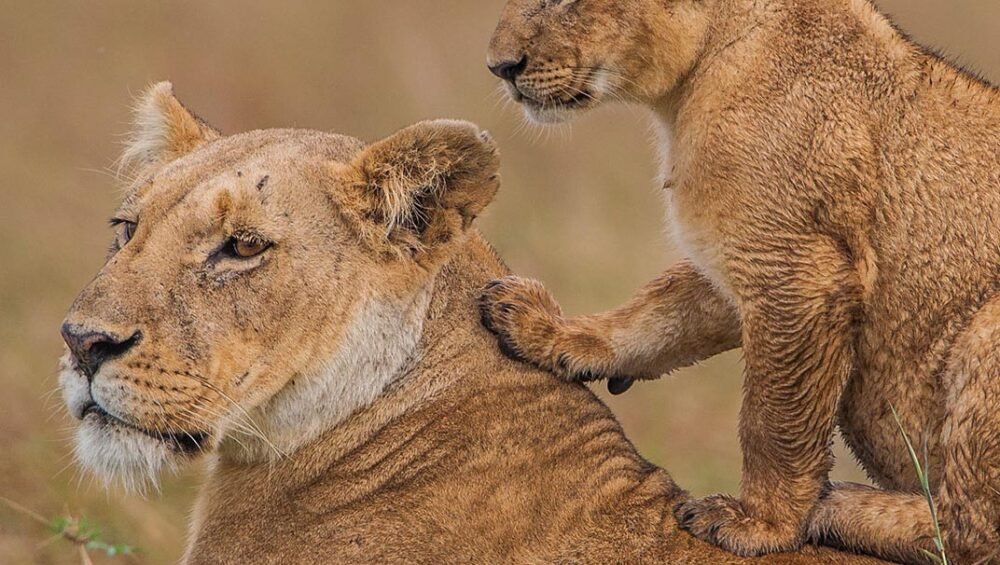
Kenya’s Masai Mara has among the highest predator density per square kilometre of any park in Africa. Its smaller size means wildlife is concentrated in a tighter area, and the long grass of the Mara provides ideal hunting cover for large lion prides and numerous cheetah families. For sheer predator encounter frequency in a short trip, the Mara is hard to beat.
Tanzania’s Serengeti has higher absolute predator numbers — over 3,000 lions, for example — but across a much larger area. The Seronera Valley in the central Serengeti delivers outstanding lion and leopard viewing year-round, and the Serengeti’s cheetah population is the largest in Africa.
The Great Migration
This is Tanzania’s most significant wildlife advantage. The Migration is present in Tanzania for approximately 9–10 months of the year across different Serengeti zones. Kenya hosts only the famous Mara River crossing phase from approximately August to October — spectacular, but just one chapter of a year-round story.
Tanzania’s calving season (January–March) in particular is a Migration experience that Kenya simply cannot offer — 400,000 calves born on the Ndutu plains in the southern Serengeti, with extraordinary predator concentrations. It is, in the opinion of many veteran safari guides, the Migration at its most emotionally powerful.
Cost: why Tanzania is more expensive — and whether it matters
A Tanzania safari costs approximately 20–30% more than a comparable Kenya safari. The main reasons are higher TANAPA park fees ($70–72 per person per day vs $100–200 for Kenya’s Mara including conservancy fees), longer travel distances between parks requiring more vehicle time, and historically fewer budget accommodation options in the Serengeti compared to the Mara.
Whether this premium is worth it depends on what you are paying for. Tanzania offers:
- The most extensive wilderness in East Africa — 38,000+ km² of protected national park land
- The Ngorongoro Crater — an experience available nowhere else in Africa
- The full-year Migration circuit rather than just the river crossing phase
- Kilimanjaro — the Roof of Africa, available from Moshi
- Zanzibar — one of the world’s great island destinations as a post-safari add-on
- Lower tourist density per square kilometre than Kenya’s Mara during peak season
For travellers who want a shorter, easier, more affordable first safari, Kenya often makes more sense. For travellers who want a deeper, more exclusive, more complete African wildlife experience, Tanzania’s premium is justified.
The trip length question
Kenya suits shorter trips. Tanzania rewards longer ones. Kenya’s parks are smaller and more accessible from Nairobi’s international hub — a meaningful 5-day Masai Mara safari is entirely feasible. Tanzania’s parks are larger, further apart, and more rewarding the more time you give them. A 7-day Tanzania northern circuit provides a satisfying experience; 10–14 days is ideal for those combining Kilimanjaro, safari, and Zanzibar.
Beaches: Tanzania wins clearly
If you want to combine your safari with a beach holiday, Tanzania’s advantage is decisive. Zanzibar — a UNESCO World Heritage Site 30 minutes by air from Dar es Salaam — offers turquoise Indian Ocean waters, white-sand beaches, Stone Town’s historic Swahili architecture, world-class snorkelling and diving, and the full resort experience. It is one of the world’s truly exceptional island destinations.
Kenya’s Diani Beach and Lamu are beautiful and deserve credit — but they are not Zanzibar. For the safari-plus-beach combination, Tanzania is the clear choice.
The best answer: combine both
For travellers with 10–14 days, combining Tanzania and Kenya in a single itinerary delivers East Africa’s finest wildlife experience. A typical combination might include: 3 nights Serengeti (Tanzania) for the central wildlife and Migration context, 2 nights Ngorongoro Crater (Tanzania), then cross to Kenya for 3 nights in the Masai Mara for river crossing viewing (July–October) and high predator density — before returning via Nairobi or continuing to Zanzibar.
This itinerary captures the best of both ecosystems: Tanzania’s scale and the Ngorongoro Crater combined with Kenya’s Mara predator intensity. Serac Adventure can coordinate the Tanzania components and link you with a trusted Kenya partner for the Mara section.
Verdict: which is right for you?
| Choose Tanzania if you… | Choose Kenya if you… |
| Have 7–14 days available | Have 5–7 days available |
| Want the calving season (Jan–Mar) | Want the Mara River crossings specifically (Aug–Oct) |
| Want to climb Kilimanjaro | Want a lower-cost first-time safari |
| Want Zanzibar for the beach | Want Diani Beach or Lamu |
| Want the Ngorongoro Crater | Want more accessible, shorter distances between parks |
| Want lower tourist density | Want the highest predator density per km² |
| Are a repeat Africa visitor seeking wilderness | Are a first-time Africa visitor seeking ease |
| Book your Tanzania safari with Serac Adventure We are a Moshi-based direct operator — local knowledge, no agency markup, all-inclusive pricing. 5-day northern circuit from $1,600 pp | Combination Kilimanjaro + safari + Zanzibar from $3,500 pp We can also coordinate Tanzania + Kenya combination itineraries through trusted partners. Contact us: +255 785 790 460 (WhatsApp) | info@seracadventure.com |