Tarangire is Tanzania’s most underrated national park — and safari veterans know it. While first-time visitors focus on the Serengeti and Ngorongoro, those who have done the northern circuit more than once consistently cite Tarangire as a personal favourite. The reason is simple: nowhere else in Tanzania delivers the combination of massive elephant herds, ancient baobab-studded landscapes, extraordinary birdlife, and genuine wilderness intimacy that defines a Tarangire game drive.
Located just 120 kilometres south-west of Arusha, Tarangire is the natural first stop on the classic northern circuit safari from Moshi. This guide covers everything you need to know — the park’s wildlife, its best areas, the key seasons, entry fees, accommodation, and why no Tanzania safari is complete without it.
| Tarangire National Park at a glance |
| Location: Manyara Region, northern Tanzania — 120km south-west of Arusha |
| Size: 2,850 km² — Tanzania’s sixth largest national park |
| Established: 1970 |
| Nearest airport: Kilimanjaro International Airport (JRO) — 2 hours by road |
| Entry fee: approximately $72 per adult per 24 hours (2026) |
| Vehicle fee: $40 per vehicle per entry |
| Best season: June–October (dry season wildlife concentration) |
| Famous for: Africa’s highest elephant density, ancient baobab trees, 550+ bird species |
| Serac Adventure package from: $280 per person per day (Tarangire + northern circuit) |
Why Tarangire deserves a place on your Tanzania safari
1. Tanzania’s largest elephant herds
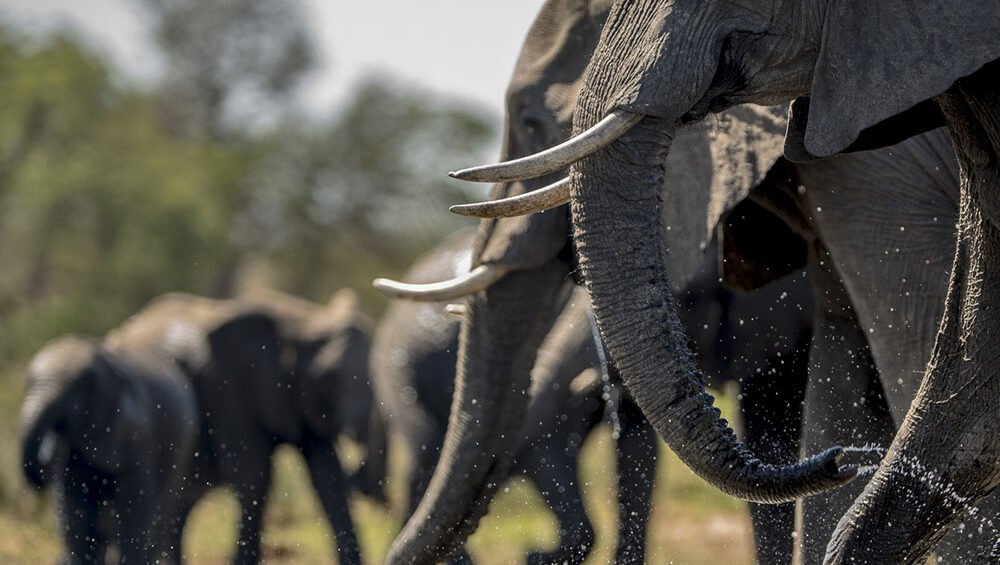
Tarangire is Tanzania’s elephant capital — nothing else in the country comes close. The park supports a population of over 5,000 elephants across its 2,850 km², and during the dry season (June–October) these herds converge on the Tarangire River — the park’s only permanent water source — in numbers that must be seen to be believed.
Individual dry-season aggregations of 200–300 elephants are not unusual. Multiple family units merge around permanent water, creating vast assemblages of elephants in numbers that dwarf anything visible in the Serengeti or Ngorongoro. These are not just sightings — they are experiences that redefine your understanding of what an elephant population looks like at full ecological density.
2. The ancient baobab landscape
Tarangire’s landscape is unlike any other park on the northern circuit. Towering baobab trees — some estimated at over 1,000 years old and capable of storing up to 900 litres of water in their swollen trunks — punctuate the savannah in a way that creates a visual atmosphere unique to this park. Photography in Tarangire is extraordinary precisely because of these trees: elephant herds moving through a baobab forest, a single giraffe dwarfed by an ancient trunk, the orange light of a Tarangire sunset behind a silhouetted baobab.
Some of Tarangire’s baobabs are large enough that elephants use them as salt licks, carving deep gouges in the fibrous trunk with their tusks. The trees bear the marks of generations of elephants — a living record of thousands of years of wildlife interaction.
3. A mini-migration of its own
During the wet season (November–May), Tarangire’s wildlife disperses across the broader Tarangire-Manyara ecosystem — animals spread out over a vast area in search of fresh water and grass. But when the dry season arrives and water sources outside the park fail, approximately 250,000 animals move back into Tarangire — drawn to the Tarangire River in a mini-migration that rivals the Serengeti’s famous event in terms of local wildlife concentration.
The result during July–October is extraordinary. Zebra herds in the thousands. Wildebeest crossing the plains. Buffalo in massive congregations. Impala, eland, hartebeest, and oryx all competing for space at the river. And above all of it, the elephants — always the elephants.
4. Exceptional predators
Tarangire’s predator population is often overshadowed by its elephant reputation but is genuinely outstanding. Lion prides hunt the river corridors at dawn. Leopards use the fig trees and riverine forest as cover. Cheetahs work the open southern plains. Spotted hyena clans are active around kills. Tarangire is also one of the best parks in Tanzania for African wild dog — the endangered painted wolf that hunts in cooperative packs and is among the most thrilling predators to witness in action.
5. Tree-climbing lions
Tarangire, along with Lake Manyara, is one of the few places in Africa where lions regularly climb trees — a behaviour observed in only a handful of places globally. The reason is thought to be a combination of escaping ground-level insects and heat, and the availability of suitable low-branching trees. Sightings of lions stretched along acacia branches, apparently indifferent to the laws of gravity, are among Tarangire’s most memorable encounters.
6. Extraordinary birdlife
With over 550 recorded species, Tarangire is one of the finest birding destinations in East Africa and hosts several species found nowhere else on the northern circuit. Among the highlights:
- Yellow-collared lovebird: endemic to Tanzania and one of Tarangire’s most characteristic species — noisy flocks in acacia woodland throughout the park.
- Ashy starling: a near-endemic found almost exclusively in the Tarangire-Manyara ecosystem.
- Rufous-tailed weaver: another Tanzanian near-endemic with a distinctive rufous tail.
- Kori bustard: the world’s heaviest flying bird — commonly seen walking across Tarangire’s open grasslands.
- Secretary bird: one of Africa’s most distinctive raptors — regularly encountered on the open plains.
- African hawk-eagle, martial eagle, bateleur: three of Africa’s most impressive raptors, all resident in Tarangire.
The Tarangire River — the park’s beating heart
The Tarangire River is the single most important wildlife feature of the park. It is the only permanent water source in the area during the dry season and acts as a magnet for wildlife throughout the park’s 2,850 km². The river corridor — lined with acacias, sausage trees, and fig trees — is where the highest wildlife concentration is found from June to October.
Game drives along the river bank during the dry season are an experience of continuous wildlife discovery — elephants drinking in the shallows, impala moving in hundreds between the trees, buffalo standing in the water to cool themselves, hippos submerged in deeper pools, and crocodiles motionless on sandy banks. A single morning drive along the Tarangire River in September can produce more wildlife sightings than a full day in any other park.
Best time to visit Tarangire
| Season | Months | Wildlife | Conditions | Verdict |
| Peak dry | Jun–Oct | Outstanding — elephant herds massive | Hot and dry, dusty roads | Best overall |
| Short dry | Jan–Mar | Very good — resident wildlife + birds | Pleasant temperatures | Excellent |
| Green season | Apr–May | Moderate — dispersed wildlife | Lush, some muddy roads | Good for birding |
| Short rains | Nov–Dec | Good — improving through Dec | Lush, green, few tourists | Good value |
The dry season peak of July–October is when Tarangire is at its most dramatic — but the park is rewarding year-round. The green season months of November–February offer extraordinary birdlife as migrants arrive, and the lush landscapes create beautiful photographic conditions even if wildlife is more dispersed.
Entry fees and practical information
| Fee | Amount (USD) | Notes |
| Park entry (adult) | ~$72 per 24 hours | International non-resident rate 2026 |
| Park entry (child 5–15) | ~$20 per 24 hours | |
| Vehicle fee | $40 per vehicle | Per entry |
| Camping fee (public) | $40 per person per night | |
| Camping fee (special) | $50 per person per night | Better locations |
All park fees are included in Serac Adventure safari packages. No hidden costs.
Getting to Tarangire
- From Moshi by road: approximately 2–2.5 hours. Drive through Arusha and south on the Dodoma highway to the Tarangire gate at Kwa Kuchinja.
- From Arusha by road: approximately 1.5 hours south to the main gate.
- Charter flight: Tarangire airstrips can be reached by charter from Arusha Airport (ARK) in approximately 30 minutes.
Accommodation options
| Tier | Options | Price range per person per night |
| Budget camping | Public campsites inside park | $80–$150 all-inclusive |
| Mid-range | Tarangire Sopa Lodge, Oliver’s Camp | $200–$350 all-inclusive |
| Luxury | Swala Camp, Sanctuary Swala | $600–$1,200+ all-inclusive |
Serac Adventure’s northern circuit safaris use mid-range lodges and tented camps in or adjacent to Tarangire as the standard first-night accommodation. Private vehicle and guide throughout.
How long to spend in Tarangire
- 1 day (half-day afternoon + morning): minimum for a taste of the park on a northern circuit safari. Sufficient for the river circuit and main wildlife areas.
- 2 days: allows exploration beyond the main river corridor into the southern swamps and more remote northern areas. Recommended for serious wildlife enthusiasts.
- 3+ days: for birders, photographers, or repeat visitors who want a deeper Tarangire experience. The park reveals new areas and species with each additional day.
Frequently asked questions: Tarangire
Is Tarangire worth visiting if I am only going to one Tanzania park?
If you can only visit one park, the Serengeti or Ngorongoro Crater offers more overall variety. But if you are doing a 3–5 day northern circuit safari, Tarangire as the first stop is highly recommended — the elephant herds alone make it unmissable, and it provides an excellent introduction to the northern circuit’s wildlife before the Serengeti.
Are there rhino in Tarangire?
Black rhino are not present in Tarangire National Park. For rhino sightings, the Ngorongoro Crater is Tanzania’s best option — the crater’s resident black rhino population is the most reliably visible in the country.
Can you do walking safaris in Tarangire?
Walking safaris are permitted in Tarangire with a licensed walking guide and are one of the park’s distinctive offerings — the chance to track elephant on foot at a respectful distance through the baobab woodland is an extraordinary experience available to more adventurous visitors. Ask us about walking safari options when planning your itinerary.
| Include Tarangire in your Tanzania safari with Serac Adventure We include Tarangire as the standard first night of all northern circuit safari packages. Private vehicle, certified guide, all park fees, accommodation, and full board meals included. 5-day northern circuit (Tarangire + Serengeti + Ngorongoro) from $1,600 per person. Contact us: +255 785 790 460 (WhatsApp) | info@seracadventure.com |