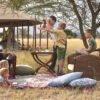
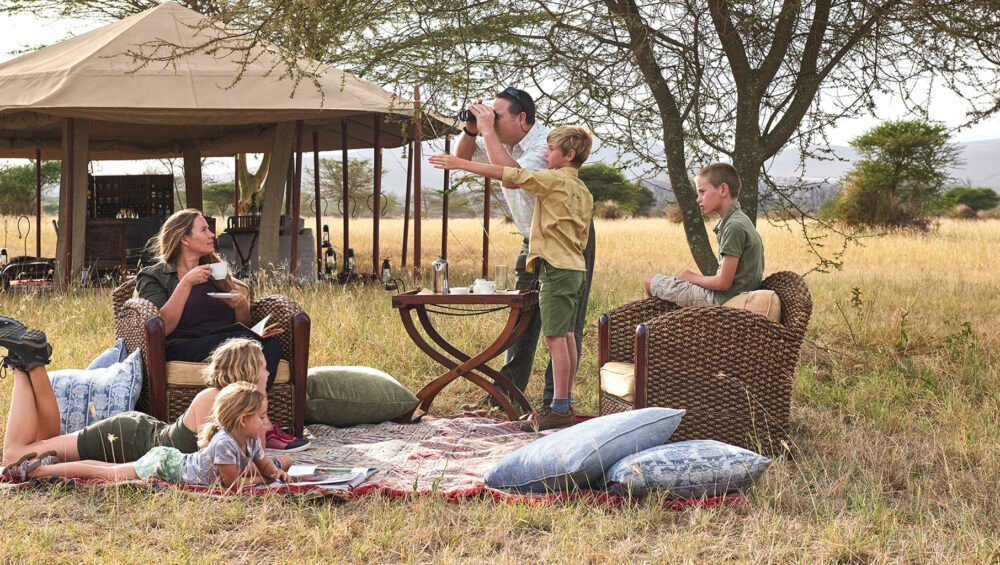
A Tanzania family safari is one of the most transformative travel experiences you can give your children. Watching your kids witness their first wild elephant at close range, hear a lion roar echo across the Serengeti at night, or understand for the first time the reality of the food chain playing out in real life — these are moments that no classroom, no documentary, and no theme park can replicate.
Tanzania is genuinely family-friendly. The northern circuit parks are well-developed, accommodation options catering to families of all ages are plentiful, and the safari format — private vehicle, expert guide, structured days — is naturally well-suited to family travel. This guide tells you everything you need to know to plan a successful Tanzania family safari in 2026.
| Tanzania family safari at a glance |
| Minimum age: no official park minimum — but 5+ recommended for most safari experiences |
| Best parks for families: Tarangire, Lake Manyara, Ngorongoro Crater, Serengeti |
| Best season for families: June–October (dry season) or January–February (calving season) |
| Recommended duration: 5–7 days for the northern circuit |
| Vehicle: private 4×4 Toyota Land Cruiser — essential for families (no shared vehicles) |
| Serac Adventure family packages from: $400 per person per day all-inclusive |
| Zanzibar add-on: ideal for families — safe beaches, snorkelling, cultural experiences |
Is Tanzania right for your family?
Tanzania is suitable for families with children of almost any age — but the experience is meaningfully different depending on how old your children are.
| Child age | Suitability | Key considerations |
| Under 5 | Possible but challenging | Short attention span, heat sensitivity. Family lodges with pools essential. |
| 5–8 years | Good with planning | Full enthusiasm, can do game drives. Afternoon rest breaks needed. |
| 9–12 years | Excellent | Old enough to engage deeply. Best age for a transformative first safari. |
| 13–17 years | Outstanding | Teenagers often find Tanzania the most impactful trip of their lives. |
| Mixed ages | Very good | Private vehicle essential. Itinerary flexibility important. |
The best parks for families
Tarangire National Park — our top family recommendation
Tarangire is Serac Adventure’s first recommendation for families with children under 12. The park’s famous elephant herds are extraordinary for children — watching hundreds of elephants move through a landscape of ancient baobab trees is a sight that stays with young visitors for life. The baobab trees themselves become objects of fascination — enormous, ancient, seemingly upside-down, and large enough for entire families to stand inside at the base.
Tarangire is also less overwhelming in scale than the Serengeti, making it easier to narrate and contextualise for younger children. The Tarangire River provides a natural focal point — children can watch animals arriving at the water and begin to understand the ecological relationships that make a safari educational as well as exciting.
Lake Manyara National Park — tree-climbing lions and flamingos
Lake Manyara is compact, diverse, and endlessly engaging for children. The famous tree-climbing lions of Manyara are one of the most immediately dramatic wildlife encounters for young visitors — a pride of lions draped horizontally along an acacia branch defies all expectation and creates instant wonder. The lake’s flamingo colonies fascinate children of all ages. Colobus monkeys in the forest canopy, hippos in the shallows, and the sheer variety of habitats in a relatively small park make Manyara an ideal addition to any family northern circuit safari.
Ngorongoro Crater — the family Big Five experience
The Ngorongoro Crater is perhaps the most family-friendly of all Tanzania’s major wildlife destinations. The crater floor is accessible, flat, and provides extraordinary visibility. Within its 260 km², families can realistically expect to see lion, elephant, buffalo, hippo, hyena, flamingo, and with patience, black rhino — all in a single day’s game drive. For children, the crater is often described as a natural arena where animals live completely wild — a concept that is simultaneously educational and immediately comprehensible.
Serengeti — the big experience for older children
The Serengeti is best suited to children aged 9 and above — its scale requires a longer attention span and the ability to appreciate the landscape as well as individual wildlife encounters. For older children and teenagers, the Serengeti is transformative. The endless plains, the scale of the wildebeest herds, and the intensity of predator encounters create an experience that many teenage visitors describe as one of the defining moments of their early lives.
Arusha National Park — perfect with very young children
For families with very young children or those wanting a gentle introduction, Arusha National Park is ideal. Just 45 minutes from Arusha and 90 minutes from Moshi, it offers giraffe, zebra, buffalo, colobus monkeys, and flamingo-dotted Momella Lakes in a compact, accessible setting. An excellent gentle first game drive experience.
Family safari logistics
Private vehicle is non-negotiable
Never book a family on a shared vehicle safari. A private 4×4 Toyota Land Cruiser is essential for family travel — it allows you to stop when a child spots something, adjust pace to your family’s rhythm, take breaks when needed, and manage noise levels. Serac Adventure provides private vehicles for all family bookings as standard.
Timing game drives around children’s energy
- Morning game drives (6:30–11am) are the most wildlife-active and coolest — always prioritise these
- Midday (11am–3pm) is hot and wildlife is less active — use for lunch, pool time, and rest
- Afternoon drives (3pm–6:30pm) offer golden-hour photography and predator activity
- For children under 8, a morning drive plus lodge rest is often better than a full day
- Build at least one full lodge rest day into a 5+ day itinerary
Choosing family-rated lodges
- Family rooms or interconnecting rooms — separate sleeping space for children
- Swimming pools — critical for midday downtime in the heat
- Secure fenced perimeter — some bush camps are unfenced
- Child-friendly menus and meal flexibility
- Junior ranger programmes, nature walks, and cultural activities
What to pack for a family safari
- Children’s junior binoculars — give each child their own set for engagement and ownership
- Wildlife identification books or cards for your children’s age group
- High-SPF sunscreen (SPF 50+) — equatorial sun is intense
- Insect repellent containing DEET — apply at dawn and dusk
- Neutral-coloured clothing — khaki, green, brown (avoid bright colours and white)
- Wide-brimmed sun hats for every family member
- Light layers for cool mornings — especially at Ngorongoro (2,300m altitude)
- Each child’s own small daypack with snacks, water bottle, and comfort items
- Old smartphone or rugged camera for children to document their own sightings
Health and safety for families
- Malaria: Tanzania has malaria risk below 1,800m. Consult your doctor about children’s antimalarial medication — dosing is weight-based. Apply DEET repellent at dawn and dusk.
- Vaccinations: Children require the same vaccinations as adults. Consult a travel health clinic 6–8 weeks before departure.
- Vehicle safety: Children must remain seated during game drives. Brief them before the first drive about staying inside the vehicle.
- Sun and heat: Children dehydrate faster than adults. Ensure consistent water drinking throughout the day.
Adding Zanzibar to a family safari
Zanzibar is an outstanding family add-on to any Tanzania safari. The calm, shallow north-coast waters are ideal for children, the beaches are extraordinary, and the snorkelling on the fringing reef gives older children their first Indian Ocean marine life experience. Stone Town’s spice tours, dhow harbour visits, and Forodhani Gardens evening food market offer memorable family cultural experiences.
- Recommended: 3–4 nights in north Zanzibar (Nungwi or Kendwa) after the safari. Fly Arusha to Zanzibar in 45 minutes.
Frequently asked questions: family safari Tanzania
What is the minimum age for a Tanzania safari?
Tanzania’s national parks have no official minimum age for safari vehicle access. Most lodges set their own minimum — typically 5 or 7 years old. Walking safaris typically require children to be 12 or older. Always confirm age requirements with your specific lodge when booking.
How do I keep children engaged on long game drives?
Wildlife bingo cards, junior wildlife guides, giving each child their own binoculars, a nature journal for drawing and describing sightings, and involving children in tracking conversations with the guide are all highly effective. A skilled guide will naturally engage children throughout the drive — tell your guide your children’s ages and interests before departure.
Is the Serengeti suitable for young children?
For children under 7, the Serengeti’s scale can be challenging — the vast plains and long drives require patience. For children 8 and above, it is excellent. We recommend starting with Tarangire and Lake Manyara before the Serengeti, allowing children to build familiarity with the safari format first.
| Book a family safari with Serac Adventure Private vehicle, family-rated lodge accommodation, and child-friendly guides throughout. We tailor every family itinerary to the ages and interests of your children. 5-day northern circuit family safari from $400 per person per day all-inclusive. Contact us: +255 785 790 460 (WhatsApp) | info@seracadventure.com |