Tanzania is one of the most extraordinary travel destinations on Earth. Home to Africa’s highest mountain, the world’s greatest wildlife migration, a UNESCO-heritage island archipelago, and some of the most hospitable people you will ever meet, Tanzania rewards every traveller who makes the journey — whether you are a first-time visitor or a seasoned Africa explorer.
But planning a first trip to Tanzania can feel overwhelming. Visas, vaccinations, flights, safety, currency, costs — there is a lot to navigate. This complete Tanzania travel guide for 2026 covers everything you need to know to plan a smooth, safe, and unforgettable trip, written by the local team at Serac Adventure, based in Moshi at the foot of Mount Kilimanjaro.
| Quick facts: Tanzania at a glance |
| Official name: United Republic of Tanzania |
| Capital city: Dodoma (administrative); Dar es Salaam (commercial hub) |
| Location: East Africa, bordered by Kenya, Uganda, Rwanda, DRC, Zambia, Malawi, Mozambique |
| Population: approximately 67 million (2026) |
| Official languages: Swahili (Kiswahili) and English |
| Currency: Tanzanian Shilling (TZS). USD widely accepted in tourist areas. 1 USD ≈ 2,700 TZS (2026) |
| Time zone: East Africa Time (EAT) — UTC+3 |
| Electricity: 230V / 50Hz. Plug types: Type G (UK-style) and Type D |
| Emergency number: 112 |
Tanzania visa requirements 2026
Most international visitors require a visa to enter Tanzania. The good news is the process is straightforward, fully online, and can be completed from anywhere in the world before your trip.
eVisa: the only recommended method since January 2025
As of 30 January 2025, Tanzania officially phased out visa-on-arrival for most nationalities. All travellers are now strongly advised — and in most cases required — to obtain an eVisa before departure through Tanzania’s official immigration portal: eservices.immigration.go.tz
Visa types and costs
| Visa type | Duration | Cost (USD) | Best for | ||
| Single-entry tourist | Up to 90 days | $50 | Most visitors — one entry, one trip | ||
| Multiple-entry | Up to 12 months | $100 | US citizens (required) & frequent visitors | ||
| Transit | Up to 7 days | $30 | Passing through Tanzania only | ||
| Business | Up to 90 days | $50 | Meetings, conferences, short business visits | ||
| Important for US citizens American visitors are required to obtain a Multiple-Entry Visa ($100), regardless of travel plans. It is valid for up to 12 months but each stay must not exceed 90 days at a time. Apply at least 2–3 weeks before departure. Processing takes up to 10 business days. | |||||
How to apply for a Tanzania eVisa — step by step
- Visit eservices.immigration.go.tz and create an account
- Complete the online application form with your personal and travel details
- Upload required documents: passport scan, passport-sized photo, return flight itinerary, accommodation confirmation
- Pay the visa fee online by credit or debit card ($50 single-entry or $100 multiple-entry)
- Allow up to 10 business days for processing — apply at least 2 weeks before travel
- Print the approval email and present it at immigration on arrival in Tanzania
Passport requirements
- Your passport must be valid for at least 6 months from your date of entry into Tanzania
- You must have at least 2 blank pages available for visa stamps
- Children travelling with parents also require individual visas and a valid passport
- Zanzibar is part of Tanzania — one eVisa covers both the mainland and Zanzibar
Visa-exempt nationalities
A small number of countries have visa-free access to Tanzania, primarily East African Community (EAC) member states. Citizens of Kenya, Uganda, Rwanda, Burundi, and South Sudan can enter without a visa under EAC agreements. All other nationalities should check the official Tanzania immigration website for the latest rules for their country.
How to get to Tanzania: flights and airports
Tanzania has three main international airports. The best choice for most Kilimanjaro climbers and northern safari travellers is Kilimanjaro International Airport (JRO), which sits between Moshi and Arusha and puts you right at the gateway to the national parks.
Tanzania’s main airports
| Airport quick guide |
| Kilimanjaro International (JRO) — best for: Kilimanjaro treks, northern safari circuit, Moshi, Arusha. 45 min from Moshi, 90 min from Arusha. |
| Julius Nyerere International, Dar es Salaam (DAR) — best for: southern Tanzania, business travel, connections to Zanzibar. |
| Abeid Amani Karume International, Zanzibar (ZNZ) — best for: beach holidays, Zanzibar arrival, Stone Town. |
Direct flights to Kilimanjaro (JRO) from Europe and the Middle East
As of 2026, direct (non-stop) intercontinental flights to JRO operate from Europe and the Middle East only. There are no direct flights from the United States, Canada, Australia, or Asia to Kilimanjaro.
| Origin | Airline | Type | Flight time |
| Amsterdam (AMS) | KLM | Direct (seasonal) | ~9 hrs |
| Paris (CDG) | Air France | Direct (seasonal) | ~9 hrs |
| Brussels (BRU) | Brussels Airlines | Direct (seasonal) | ~9 hrs 15 min |
| Istanbul (IST) | Turkish Airlines | Direct (year-round) | ~6 hrs |
| Doha (DOH) | Qatar Airways | Direct (seasonal) | ~5 hrs |
| Zürich (ZRH) | Edelweiss Air | Direct (seasonal) | ~9 hrs |
| Milan (MXP) | Neos | Direct (seasonal) | ~8 hrs |
Best connection routes by region
- From the USA / Canada: Connect via Amsterdam (KLM), Istanbul (Turkish Airlines), Doha (Qatar Airways), or Addis Ababa (Ethiopian Airlines). Total journey 14–20 hours depending on layover.
- From the UK: Connect via Amsterdam (KLM), Nairobi (Kenya Airways), Doha (Qatar Airways), or Istanbul (Turkish Airlines). Journey time 10–16 hours.
- From Australia / New Zealand: Connect via Dubai, Doha, Nairobi, or Addis Ababa. Journey typically 20–28 hours.
- From East Africa (Nairobi, Kigali, Entebbe): Short regional hops via Kenya Airways, RwandAir, Ethiopian Airlines, or Precision Air. Under 2 hours.
| Flight booking tips for Tanzania 2026 Book early: peak season flights (June–October) sell out fast, especially KLM direct to JRO. Turkish Airlines and Ethiopian Airlines often offer the best value fares for US and UK travellers — check both regularly. Qatar Airways via Doha is popular for smooth connections, good luggage allowances, and year-round schedules. For Kilimanjaro climbers: fly into JRO (not DAR) — you land 45 minutes from Moshi and avoid a 7-hour bus/drive. Build in at least one buffer day after arriving before starting your Kilimanjaro climb or safari — jet lag and altitude are a difficult combination. |
Getting from JRO airport to Moshi
Kilimanjaro International Airport is located 40–50 km from Moshi town centre. Transfer options:
- Private airport transfer (recommended): Serac Adventure includes airport pickup in all packages. Journey time approximately 40–50 minutes. Book in advance.
- Shared shuttle: Several shuttle operators run between JRO, Moshi, and Arusha. Cost around $15–25 per person. Book through your hotel or operator.
- Taxi: Available outside arrivals. Agree the price before getting in. Expect to pay $30–50 for a private taxi to Moshi.
- Public transport (dala dala): Cheapest option but impractical with luggage and not recommended for late-night arrivals.
Best time to visit Tanzania
Tanzania is a year-round destination, but the timing of your visit significantly affects the weather, wildlife viewing, crowds, and price. Here is what to expect month by month.
Peak dry season: June to October
The most popular time to visit Tanzania. Vegetation is sparse, animals gather around water sources, and game viewing in the northern parks is outstanding. The famous Mara River wildebeest crossings happen from July to October. Kilimanjaro climbing conditions are excellent. Expect higher prices and more visitors at lodges and camps.
Short dry season: January to March
Excellent for the Serengeti calving season in January and February — one of the most dramatic wildlife spectacles in Africa. Good Kilimanjaro climbing weather. Quieter and cheaper than July–October. The Ndutu area in the southern Serengeti is spectacular during this period.
Green / wet seasons: April–May and November–December
The long rains (April–May) bring lush, photogenic landscapes, far fewer tourists, and significantly lower accommodation prices. Some roads in remote areas become difficult. The short rains (November) are lighter and less disruptive. Both seasons offer good birding and are underrated for experienced safari travellers on a budget.
| Tanzania seasons at a glance |
| Jan–Mar: Short dry season. Calving in Serengeti, good Kili weather, fewer crowds. Recommended. |
| Apr–May: Long rainy season. Lush landscapes, lowest prices, some road challenges. |
| Jun–Oct: Peak dry season. Best wildlife viewing, Migration river crossings. Most expensive. |
| Nov–Dec: Short rains. Still good game viewing, lower prices, occasional showers. |
Health and vaccinations for Tanzania 2026
Tanzania is a tropical country and some health precautions are essential. Plan your medical preparation at least 6–8 weeks before travel to allow time for vaccinations to take effect.
Required vaccination: yellow fever
A yellow fever vaccination certificate is required if you are arriving from — or have transited through for more than 12 hours — a country with a risk of yellow fever transmission. This includes many African and South American countries. If you are flying direct from Europe, North America, or Australia without transiting through a risk country, you are generally not required to show a certificate. However, spot checks do occur at Kilimanjaro and Zanzibar airports, so if there is any doubt, get vaccinated. The vaccine provides lifetime protection.
Recommended vaccinations
- Malaria: Malaria is present throughout Tanzania below 1,800m elevation year-round, including Zanzibar. Consult your doctor or travel health clinic about antimalarial medication — atovaquone/proguanil (Malarone), doxycycline, or mefloquine are commonly prescribed. Note that Kilimanjaro trekkers above 1,800m are at lower risk, but you will be at altitude only for part of your trip.
- Hepatitis A: Recommended for all travellers. Transmitted through contaminated food and water.
- Typhoid: Recommended, particularly for those eating outside high-end hotels and lodges.
- Hepatitis B: Recommended for longer stays or travellers who may need medical care.
- Tetanus, diphtheria, pertussis: Ensure your routine boosters are up to date before travel.
- Rabies: Consider for longer stays, remote travel, or work involving animals.
- Cholera: Recommended for travellers visiting rural areas or eating street food extensively.
Malaria prevention on the ground
- Apply insect repellent containing DEET to all exposed skin at dawn and dusk
- Wear long sleeves and long trousers in the evenings
- Sleep under a mosquito net — most lodges and guesthouses provide them
- Take your prescribed antimalarial medication as directed — start before travel and complete the course
- Seek medical attention immediately if you develop fever, chills, or flu symptoms during or after your Tanzania trip
| Health tip: medical facilities in Tanzania Arusha and Moshi have reliable private clinics and hospitals for tourists. Recommended in Moshi: KCMC (Kilimanjaro Christian Medical Centre) — the best hospital in northern Tanzania. Recommended in Arusha: Arusha Lutheran Medical Centre (ALMC) and SELIAN Hospital. Travel insurance with emergency medical evacuation cover is strongly recommended — see the insurance section below. |
Food and water safety
- Drink only bottled or filtered water — do not drink tap water in Tanzania
- Avoid ice in local restaurants and street food stalls
- Eat at well-frequented restaurants and lodges — food at reputable establishments is generally safe
- Street food (mishkaki, chapati, samosas) is popular and can be safe if freshly cooked and hot
- Carry oral rehydration salts and basic medication for travellers’ diarrhoea
Is Tanzania safe for tourists in 2026?
Tanzania is widely regarded as one of the safest countries in East Africa for international tourists. Violent crime against visitors is rare, and Tanzania has a stable political environment and a well-established, professional tourism industry. That said, like any travel destination, sensible precautions are necessary — particularly in busy urban areas.
General safety
- Tanzania’s main tourist destinations — Moshi, Arusha, Serengeti, Ngorongoro, Zanzibar — are all considered safe for tourists
- Petty theft (pickpocketing, bag snatching) can occur in busy markets, bus stations, and city centres
- Avoid displaying expensive jewellery, cameras, or large amounts of cash in public
- Use hotel safes for passports, extra cash, and valuables
- Avoid walking alone at night in unfamiliar urban areas
- Use registered taxis, ride-hailing apps (Uber, Bolt), or your hotel’s arranged transport — never accept rides from unlicensed vehicles
Road safety
Road conditions vary significantly across Tanzania. Highways between major cities are generally well maintained, but rural and unpaved roads can be rough — particularly during the rainy season. Traffic in Dar es Salaam and Arusha can be chaotic.
- Always use a seatbelt
- Avoid travelling by road after dark where possible — wildlife, pedestrians, and poor road lighting create hazards
- Use reputable bus companies for intercity travel (Dar Express, Kilimanjaro Express)
- Safari vehicles operated by licensed companies are safe and purpose-built for Tanzania’s terrain
Zanzibar-specific safety
Zanzibar is generally very safe for tourists. Women travellers should dress modestly, particularly when visiting Stone Town and villages — Zanzibar is a predominantly Muslim island and local customs should be respected. Cover shoulders and knees when outside beach resort areas.
Wildlife and national park safety
Tanzania’s national parks are well-managed and your guide will always brief you on safety protocols. The main rules:
- Never leave the vehicle during a game drive unless your guide explicitly says it is safe
- Do not approach, feed, or attempt to touch wildlife — even small animals can be dangerous
- In camp, follow your guide’s instructions — animals including hippos, elephants, and hyenas can enter camp at night
- On Kilimanjaro, always follow your guide’s instructions regarding weather, pace, and health assessment
| Emergency contacts — Tanzania 2026 General emergency: dial 112 Police: 112 or local station number Tanzania Tourist Board (TTB): +255 22 211 1244 Nearest hospital (Moshi): KCMC — +255 27 275 4377 Nearest hospital (Arusha): ALMC — +255 27 254 8530 Serac Adventure 24/7 support: +255 785 790 460 (WhatsApp) |
Tanzania travel costs and budget 2026
How much does a Tanzania trip cost? The honest answer is: it depends enormously on what you are doing. A multi-day Kilimanjaro climb or Serengeti safari is a significant investment anywhere in the world. But outside of parks and treks, Tanzania offers excellent value — food, local transport, and accommodation in towns are genuinely affordable.
Daily budget overview (excluding safaris and Kilimanjaro)
| Category | Budget | Mid-range | Luxury |
| Accommodation (per night) | $10–30 (hostel/guesthouse) | $30–80 (mid-range hotel) | $100–250 (boutique/lodge) |
| Meals (per day) | $5–15 (local restaurants) | $20–50 (mid-range dining) | $60–100+ (fine dining / safari lodge) |
| Local transport | $1–5 (dala dala / bus) | $20–40 (private taxi/transfer) | $60–100+ (private vehicle) |
| Activities / day trips | $30–60 (group tours) | $70–150 (private day trips) | $150–300+ (exclusive experiences) |
| Daily total (estimate) | $45–100 per person | $140–320 per person | $320–650+ per person |
Safari and Kilimanjaro cost overview
| Big-ticket Tanzania experiences — price guide |
| Kilimanjaro climb (6–8 days): $1,500–$3,500 per person all-inclusive — see our Kilimanjaro trekking page for route pricing |
| Budget camping safari (per day, group): $200–$400 per person per day including park fees, guide, meals |
| Mid-range lodge safari (per day): $400–$800 per person per day |
| Luxury safari (per day): $800–$1,500+ per person per day |
| Zanzibar beach add-on: $50–$300 per person per day depending on accommodation tier |
| Typical 10-day Tanzania trip (Kili + safari + Zanzibar): $5,000–$9,000 per person |
Money and currency tips
- Currency: Tanzanian Shilling (TZS). Exchange rate approximately 1 USD = 2,700 TZS in 2026.
- USD widely accepted: US dollars are accepted in most tourist areas, hotels, parks, and by tour operators. Bring crisp, undamaged notes — torn or pre-2006 bills are often refused.
- ATMs: Available in Moshi, Arusha, Dar es Salaam, and Zanzibar. Crdb, NMB, and Exim Bank ATMs are the most reliable. Withdraw TZS for local purchases and small payments.
- Cards: Visa and Mastercard accepted at larger hotels, restaurants, and tour operators. Less reliable at smaller establishments — always carry cash as backup.
- Tipping: Tipping is customary and genuinely appreciated. Typical amounts: guide $15–20 per day, porter (Kilimanjaro) $10–15 per day, driver $10–15 per day, waiter 10% of bill.
| Save money in Tanzania: 5 practical tips 1. Book directly with a local operator like Serac Adventure — no agency markup means 10–20% savings on treks and safaris. 2. Eat where locals eat — ugali, chapati, beans, and rice from local restaurants cost $2–5 per meal. 3. Travel in shoulder season (January–March or November) for 20–40% lower lodge rates. 4. Take the Azam ferry from Dar es Salaam to Zanzibar ($35–50) instead of flying ($100–200). 5. Share safari costs — a group of 4 in a shared vehicle dramatically reduces the per-person price. |
Getting around Tanzania
Domestic flights
The fastest and most comfortable way to travel between Tanzania’s major destinations. Precision Air, Air Tanzania, Auric Air, and Coastal Aviation connect Kilimanjaro, Dar es Salaam, Zanzibar, Arusha, Serengeti, and the Selous. A flight from Kilimanjaro to Zanzibar takes about 1.5 hours. Book ahead during peak season.
Bus / coach
Reliable long-distance coaches connect Tanzania’s major towns. Dar Express, Kilimanjaro Express, and Royal Coach are reputable operators running Moshi–Dar es Salaam, Moshi–Arusha, and Arusha–Nairobi routes. The Moshi to Dar es Salaam journey takes approximately 7–8 hours. Affordable but significantly slower than flying.
Safari vehicle
All game drives in national parks are conducted in purpose-built 4×4 vehicles — typically Toyota Land Cruisers with pop-up roofs. Your safari operator provides the vehicle and driver-guide. Serac Adventure uses well-maintained private Land Cruisers for all safari and day trip operations.
Dala dala (local minibus)
The cheapest way to move between towns and neighbourhoods. Incredibly inexpensive — typically 500–2,000 TZS (under $1) per journey — but crowded, slow, and not suitable for large luggage. Fine for short local hops in Moshi or Arusha once you know the routes.
What to do in Tanzania: top experiences for first-timers
1. Climb Mount Kilimanjaro
Africa’s highest mountain at 5,895 metres, Kilimanjaro is a bucket-list summit that is achievable for fit, well-prepared trekkers with no technical climbing experience. Serac Adventure offers guided climbs on all major routes — including the Lemosho, Machame, and Marangu routes — from our base in Moshi. Packages start from $1,500 per person. See our complete Kilimanjaro trekking guide for full details.
2. Go on a Tanzania wildlife safari
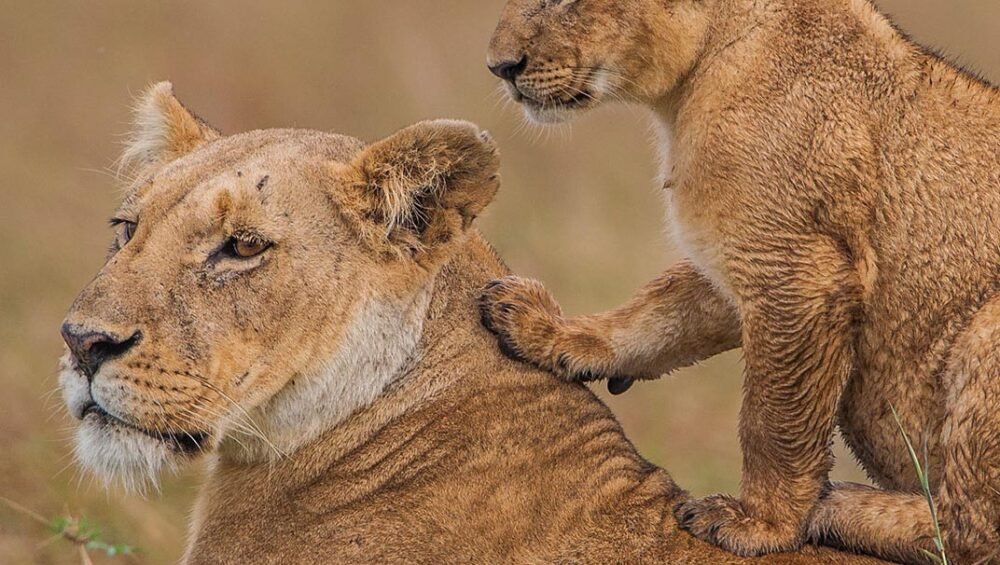
Tanzania’s northern safari circuit — Serengeti, Ngorongoro Crater, Tarangire, and Lake Manyara — offers some of the finest Big Five game viewing anywhere in Africa. The Great Wildebeest Migration passes through the Serengeti year-round, with the iconic Mara River crossings occurring July to October. Serac Adventure operates tailor-made northern circuit safaris from Moshi and Arusha. See our Tanzania safari tours page for packages and pricing.
3. Explore Zanzibar
Tanzania’s island gem — a short 30-minute flight or 2-hour ferry from Dar es Salaam. Zanzibar offers turquoise Indian Ocean waters, white-sand beaches, spice farms, UNESCO-listed Stone Town, and the world-famous Nungwi and Kendwa beaches. Most Tanzania itineraries end with 3–5 days in Zanzibar as the perfect post-safari or post-Kilimanjaro recovery.
4. Day trips and cultural experiences around Moshi
Moshi is surrounded by extraordinary day trip possibilities — from the Materuni Waterfalls and Chagga coffee farm tours on the lower slopes of Kilimanjaro to Chemka Hot Springs, Maasai village visits, Lake Chala kayaking, and Arusha National Park game drives. These make excellent additions to any Tanzania itinerary, especially for the days before or after a Kilimanjaro climb. See our day trips page for the full menu.
Culture, customs & practical tips for Tanzania
Language
Tanzania’s national language is Swahili (Kiswahili) — one of Africa’s most widely spoken languages and a genuine source of pride for Tanzanians. English is widely spoken in the tourist industry, hotels, and national parks. Learning a few Swahili phrases is warmly appreciated:
- Jambo / Habari — Hello / How are you?
- Asante (sana) — Thank you (very much)
- Karibu — Welcome / You’re welcome
- Pole pole — Slowly slowly (the Kilimanjaro motto!)
- Hakuna matata — No problem / Don’t worry
Religion and dress
Tanzania is a religiously diverse country — predominantly Christian on the mainland and Muslim on Zanzibar. Tanzanians are generally respectful and welcoming of all backgrounds. On Zanzibar, dress modestly when outside beach areas: cover shoulders and knees. On the mainland, casual clothing is fine at most tourist sites and restaurants, but modest dress is appreciated when visiting villages or markets.
Photography etiquette
Always ask permission before photographing people — particularly Maasai, who may request a small fee (typically $1–2) for photos. Photography is permitted freely in national parks (not at government buildings, airports, or military installations). Respect cultural sensitivities, especially around religious ceremonies.
Tipping culture
Tipping is expected and meaningful in Tanzania’s tourism sector, where wages are modest. As a guide:
- Safari guide / Kilimanjaro lead guide: $15–20 per day
- Kilimanjaro porter: $10–15 per day (per porter — a standard team has 4–6 porters)
- Cook: $8–12 per day
- Hotel staff, restaurant waiters: 10% of bill or 2,000–5,000 TZS
- Driver: $10 per day for day trips, $15 per day for multi-day safaris
Travel insurance for Tanzania
Travel insurance is not legally required to enter Tanzania, but it is strongly recommended — and in practical terms, essential. Medical evacuation from a remote national park or from high on Kilimanjaro can cost tens of thousands of dollars. A comprehensive travel insurance policy protects you against:
- Medical emergencies and hospitalisation
- Emergency medical evacuation (helicopter or fixed-wing aircraft from parks or the mountain)
- Trip cancellation, curtailment, or delays
- Lost, stolen, or damaged luggage and equipment
- Personal liability
| Travel insurance checklist for Tanzania Ensure your policy covers high-altitude trekking if you are climbing Kilimanjaro — standard policies often exclude activities above 4,000m or 5,000m. Check that emergency medical evacuation is included with a high limit (minimum $250,000 recommended). Recommended providers for Tanzania adventure travel: World Nomads, Battleface, True Traveller, Allianz. Buy insurance before you fly — some policies are invalid if purchased after departure. |
Plan your Tanzania trip with Serac Adventure
Serac Adventure is a locally owned Tanzania tour operator based in Moshi Town, at the foot of Mount Kilimanjaro. Our team of experienced local guides, safari specialists, and travel planners is ready to help you design the Tanzania trip of a lifetime — whether you are planning a Kilimanjaro climb, a Serengeti safari, a cultural day trip from Moshi, or a combination of all three.
| What Serac Adventure offers |
| Guided Kilimanjaro climbs: all routes from $1,500 per person — Lemosho, Machame, Marangu and more |
| Tanzania wildlife safaris: tailor-made northern circuit game drives from Moshi and Arusha |
| Day trips from Moshi: Materuni Waterfalls, Chemka Hot Springs, Maasai village, Lake Chala and more |
| Kilimanjaro + safari + Zanzibar combo packages: seamless end-to-end Tanzania itineraries |
| Airport transfers, pre-trip planning support, and 24/7 WhatsApp assistance |
| KINAPA-licensed | locally owned | transparent pricing | fair porter wages |
Contact us: +255 785 790 460 | info@seracadventure.com | WhatsApp available 24/7
Location: Along New Street, Moshi Town, Kilimanjaro Region, Tanzania
Frequently asked questions: Tanzania travel 2026
Do I need a visa to visit Tanzania?
Most nationalities require a visa. Since January 2025, all travellers are advised to obtain an eVisa online before departure at eservices.immigration.go.tz. The standard single-entry tourist visa costs $50 and allows stays of up to 90 days. US citizens must apply for the $100 multiple-entry visa.
Is Tanzania safe for solo travellers and women?
Yes — Tanzania is considered safe for solo travellers, including solo women. Violent crime against tourists is rare. Standard precautions apply: avoid isolated areas at night, dress modestly in conservative areas, use official taxis, and keep valuables secure. Zanzibar requires modest dress outside beach areas.
What is the best airport to fly into for Kilimanjaro?
Kilimanjaro International Airport (JRO) is the best option for travellers climbing Kilimanjaro or doing a northern circuit safari. It is located 40–50 km from Moshi and 75 km from Arusha. Direct flights operate from Amsterdam (KLM), Istanbul (Turkish Airlines), Doha (Qatar Airways), Brussels, Paris, and Milan.
What currency should I bring to Tanzania?
US dollars are widely accepted throughout Tanzania’s tourist sector and are recommended as your main travel currency. Bring crisp, clean notes — damaged or pre-2006 bills are often refused. Tanzanian Shillings (TZS) are useful for local markets, dala dala transport, and small purchases. The exchange rate in 2026 is approximately 1 USD = 2,700 TZS.
Do I need travel insurance for Tanzania?
While not legally required, travel insurance is strongly recommended — particularly medical evacuation cover, which is essential if you are climbing Kilimanjaro or travelling to remote national parks. Ensure your policy covers high-altitude trekking if planning a Kilimanjaro climb.
How much does a Tanzania trip cost?
A Tanzania trip budget varies widely depending on activities. Outside safaris and Kilimanjaro climbs, Tanzania is affordable: budget $45–100 per person per day for accommodation, food, and transport. A Kilimanjaro climb costs $1,500–$3,500 all-inclusive. A 3-day safari starts from around $850 per person. A typical 10-day itinerary combining Kilimanjaro, a 3-day safari, and 3 nights in Zanzibar typically costs $5,000–$9,000 per person all-inclusive.